
Traditional Furniture & Regional Cupboard Traditions
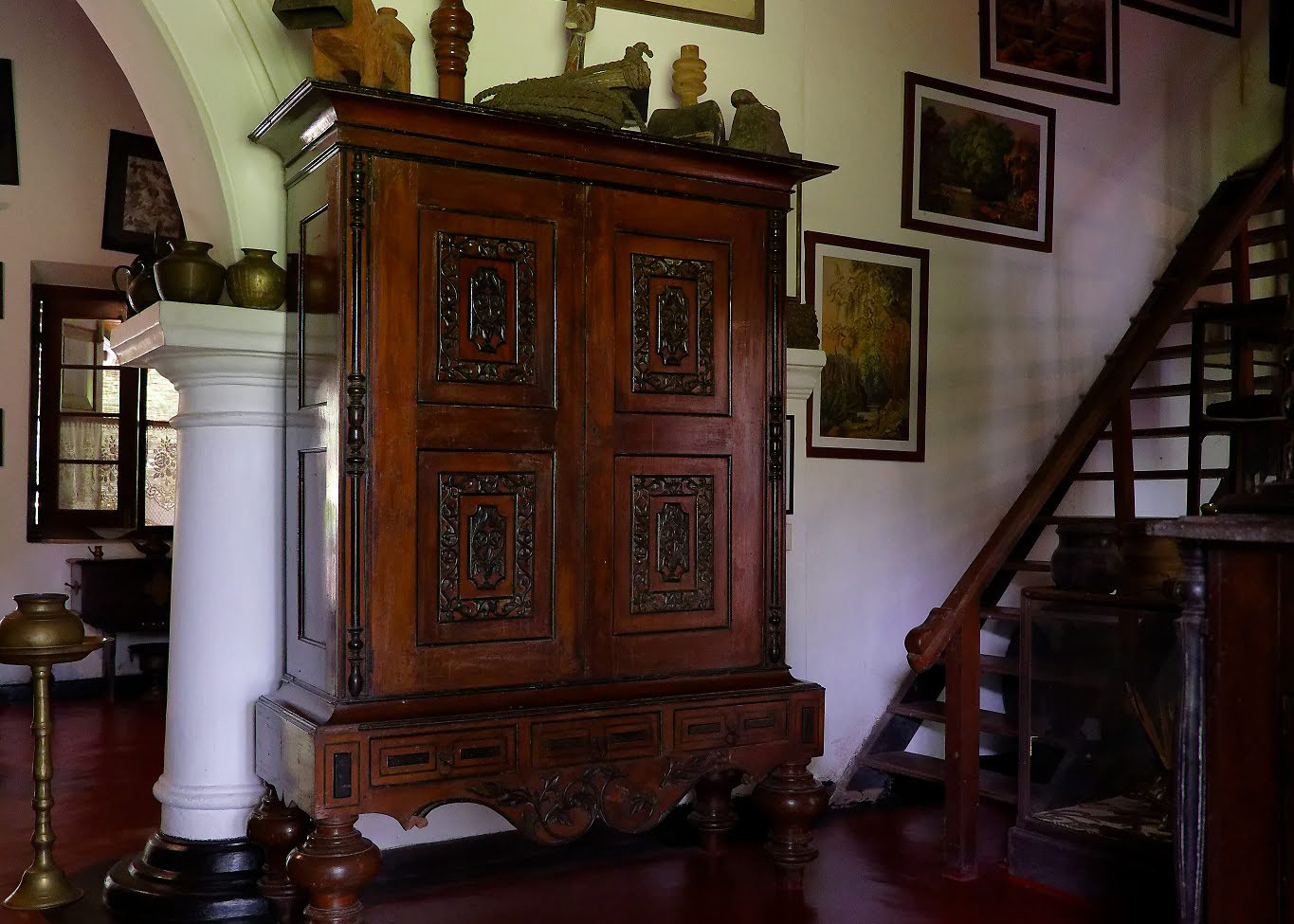
In pre-colonial Sri Lanka, domestic interiors were sparsely furnished. Most households—especially outside the aristocracy—contained only a few rudimentary items: mats for sitting and sleeping, simple platforms, and basic storage chests. Seating above floor level was rare and typically reserved for elite or ceremonial contexts.
The idea of furniture as a crafted, decorative object emerged gradually, gaining momentum during the Portuguese, Dutch, and later British periods.
Colonial contact introduced new forms—chairs, tables, bedsteads, and cupboards—whose designs reflected European tastes but were re-interpreted by Sri Lankan artisans using local hardwoods such as jak, teak, nadun (Pericopsis mooniana), and ebony. Over time, these pieces evolved into a distinctive hybrid style, blending imported silhouettes with indigenous craftsmanship and climatic adaptations.
Within this evolution, two distinct regional traditions emerged:
- LOW-COUNTRY (COASTAL) TRADITION – In coastal and lowland areas, European-influenced cupboards and cabinets became prominent. Crafted by master cabinet-makers in centres like Moratuwa, Galle, and Pettah, these freestanding pieces were richly ornamental, often featuring inlaid panels, carved details, and highly polished surfaces. They served not only as storage but also as statements of wealth and refinement.
- UP-COUNTRY (KANDYAN) TRADITION – In the Kandyan highlands, the approach to storage was more restrained and integrated into architecture. Large, ornate cupboards were less common; instead, built-in storage spaces were incorporated into the walawwa’s layout. Furniture emphasised function and climate responsiveness, with simpler forms complementing the elegance of the surrounding timber architecture.
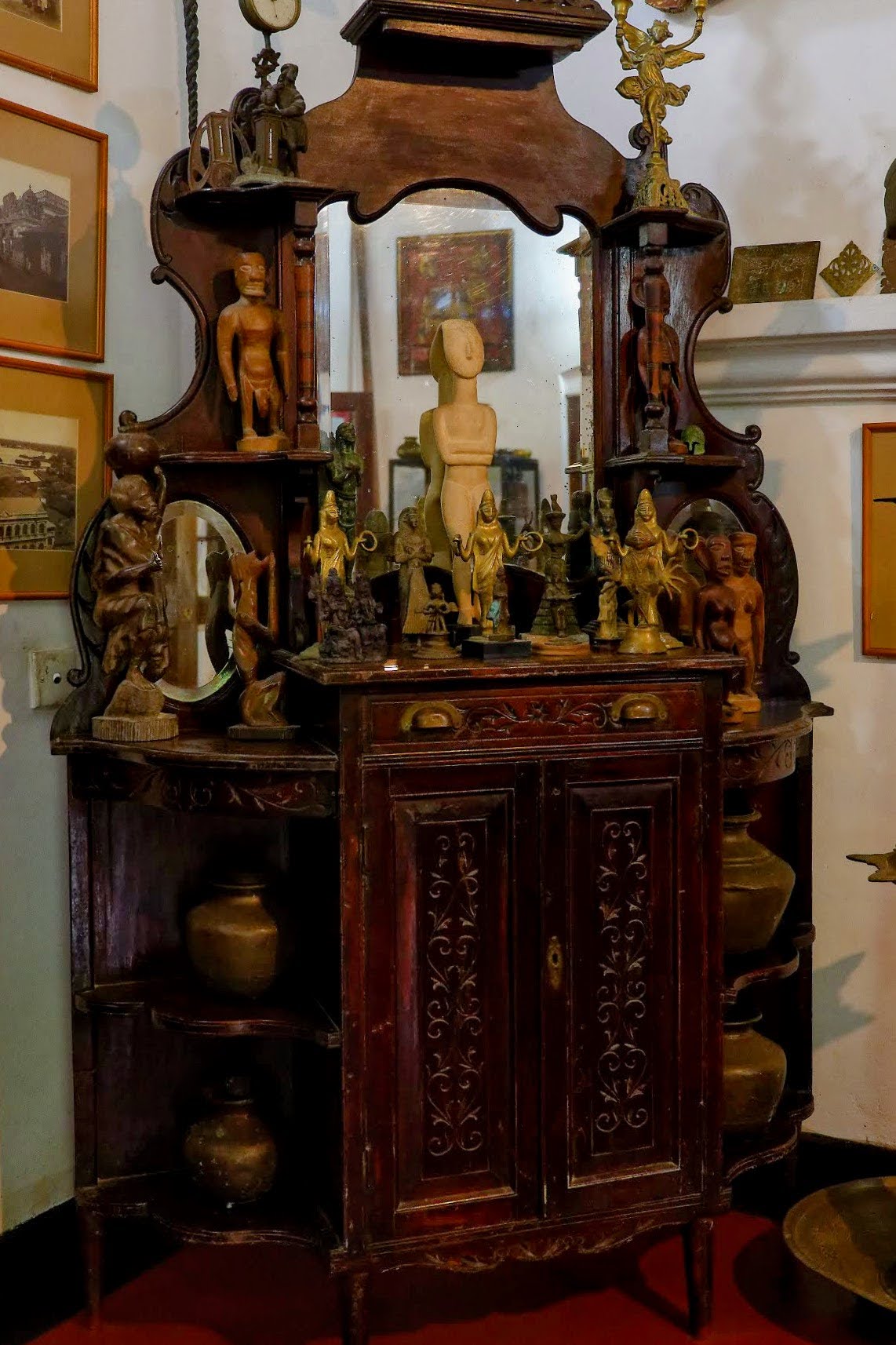
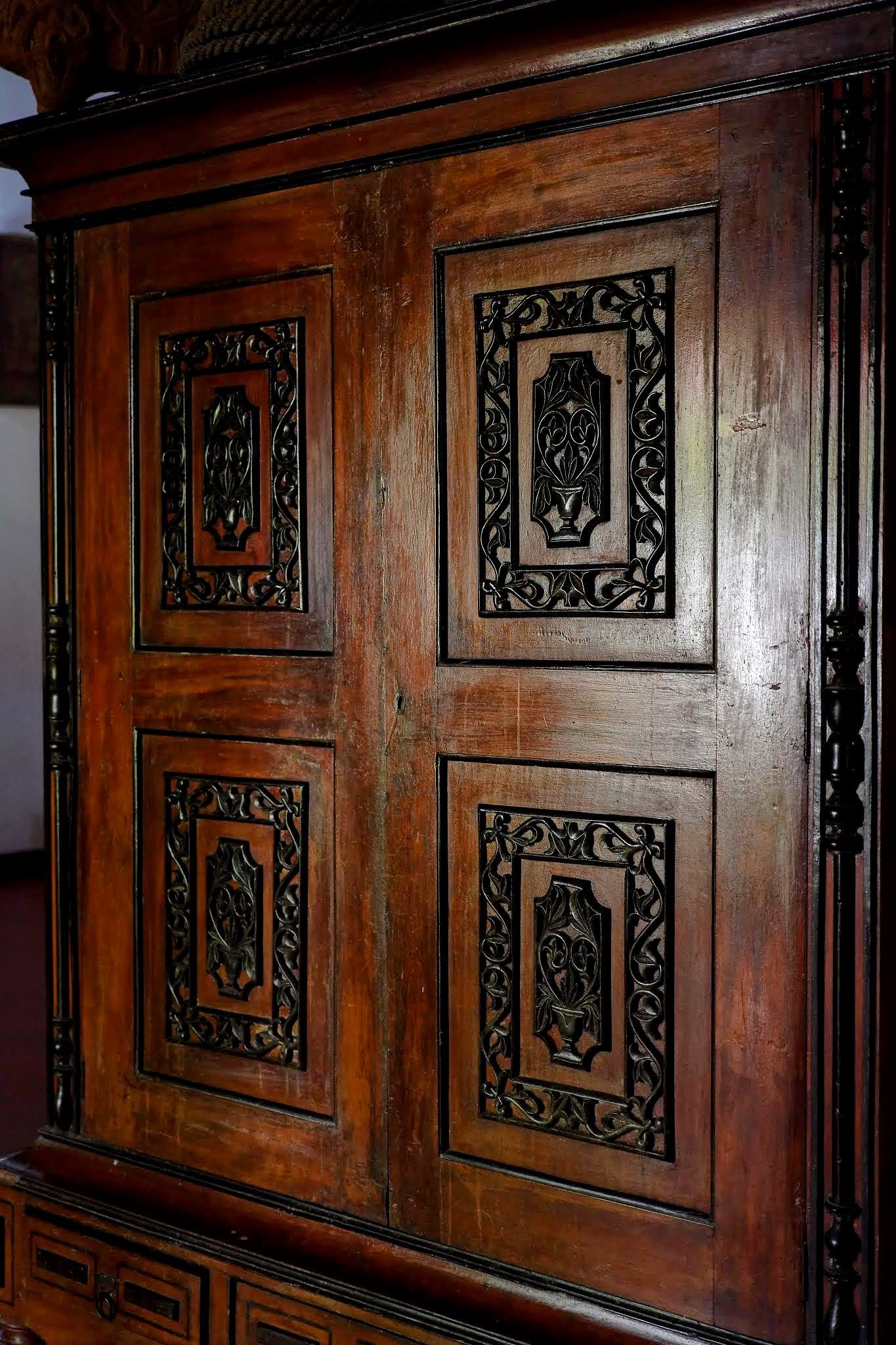
Traditional Furniture & Regional Cupboard Traditions © Janaka Samarakoon - Suriyakantha CAC Pvt Ltd
The Suriyakantha Centre’s traditional furniture collection focuses on post-colonial antique pieces—heirlooms from both traditions. Among them are heavy wooden chests from the Kandyan region, robust hardwood cupboards from the coastal lowlands, fine examples of cabinet-making from renowned southern workshops, and elegant highland furnishings whose understated forms echo the Kandyan aesthetic.
Together, these works tell a layered story: from a time when furniture was a rare necessity, through its transformation into a symbol of status and artistry, to its place today as a preserved legacy of Sri Lankan craftsmanship.
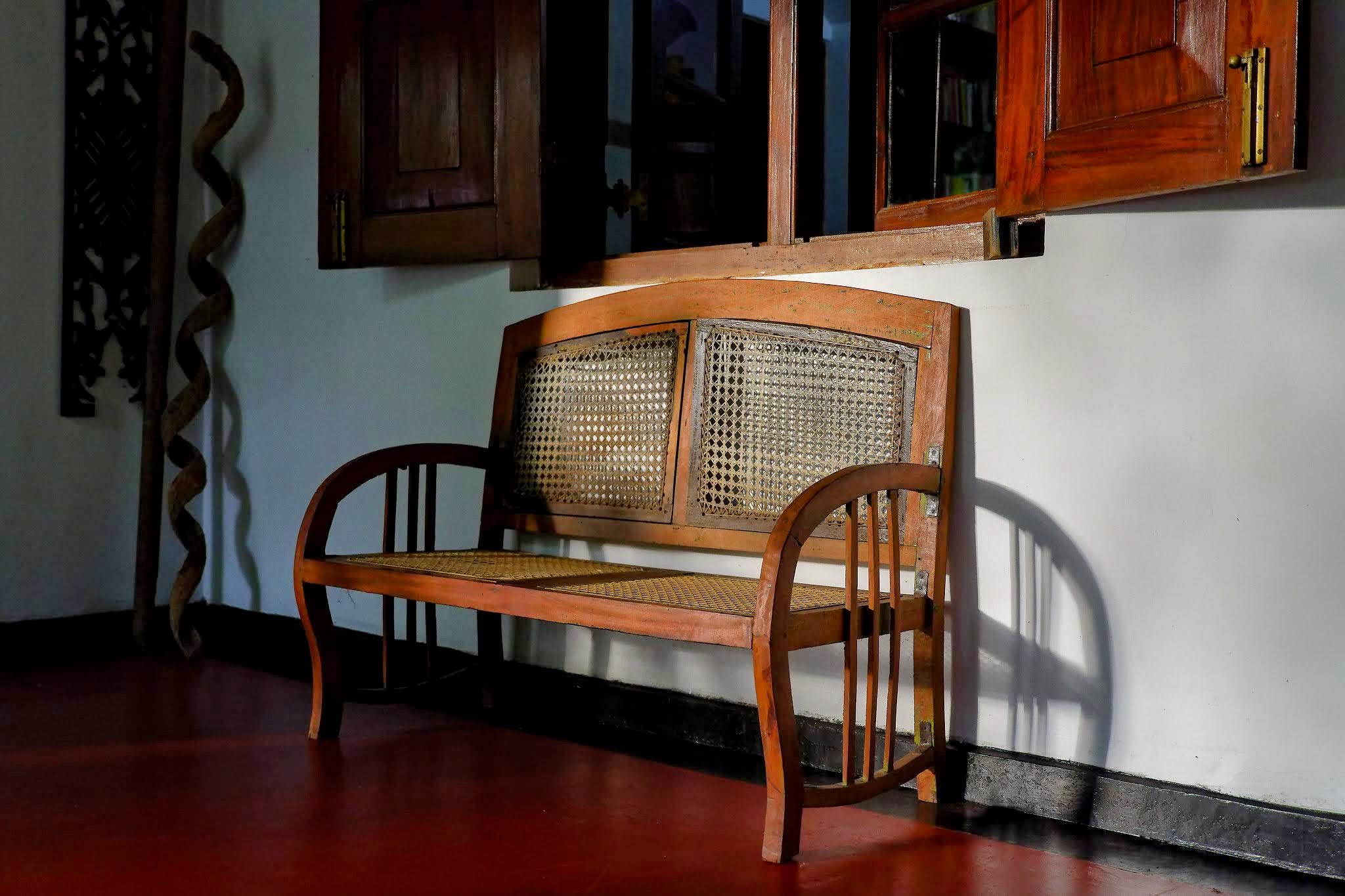
Sri Lanka or South India, late 19th–early 20th century - Wood with woven cane panels
This bench reflects the hybrid furniture traditions that developed under colonial influence in South Asia. Its structure is European in conception — a two-seater settee with arched backrest and curved arms — yet its use of woven cane (rattan) is entirely local.
Cane weaving had long been practiced in South Asia for mats, baskets, and furniture. By contrast, in Europe woven rush, willow, and straw were common for chair seats until the late 17th century, when colonial trade introduced rattan from Asia. From then on, “cane chairs” became fashionable in England, France, and the Low Countries, prized for their lightness, durability, and exotic association with overseas trade.
In Sri Lanka and South India, British officials and merchants commissioned Sinhalese and Tamil carpenters to adapt these European models with local craftsmanship. Dense native timbers such as teak, satinwood, and ebony were combined with ventilated cane seats, joined with pegged mortise-and-tenon carpentry that withstood monsoon humidity.
Such benches were typically found in verandas, reception rooms, and offices, offering a cooler and lighter alternative to fully upholstered seating. They belong to the broader family of “colonial cane furniture,” which also includes chairs, cupboards, and the more famous planter’s chairs.
© 2025 Suriyakantha CAC (Pvt) Ltd | All Rights Reserved