
A Courtyard Reimagined: The Suriyakantha Walawwa’s Evolved Heart
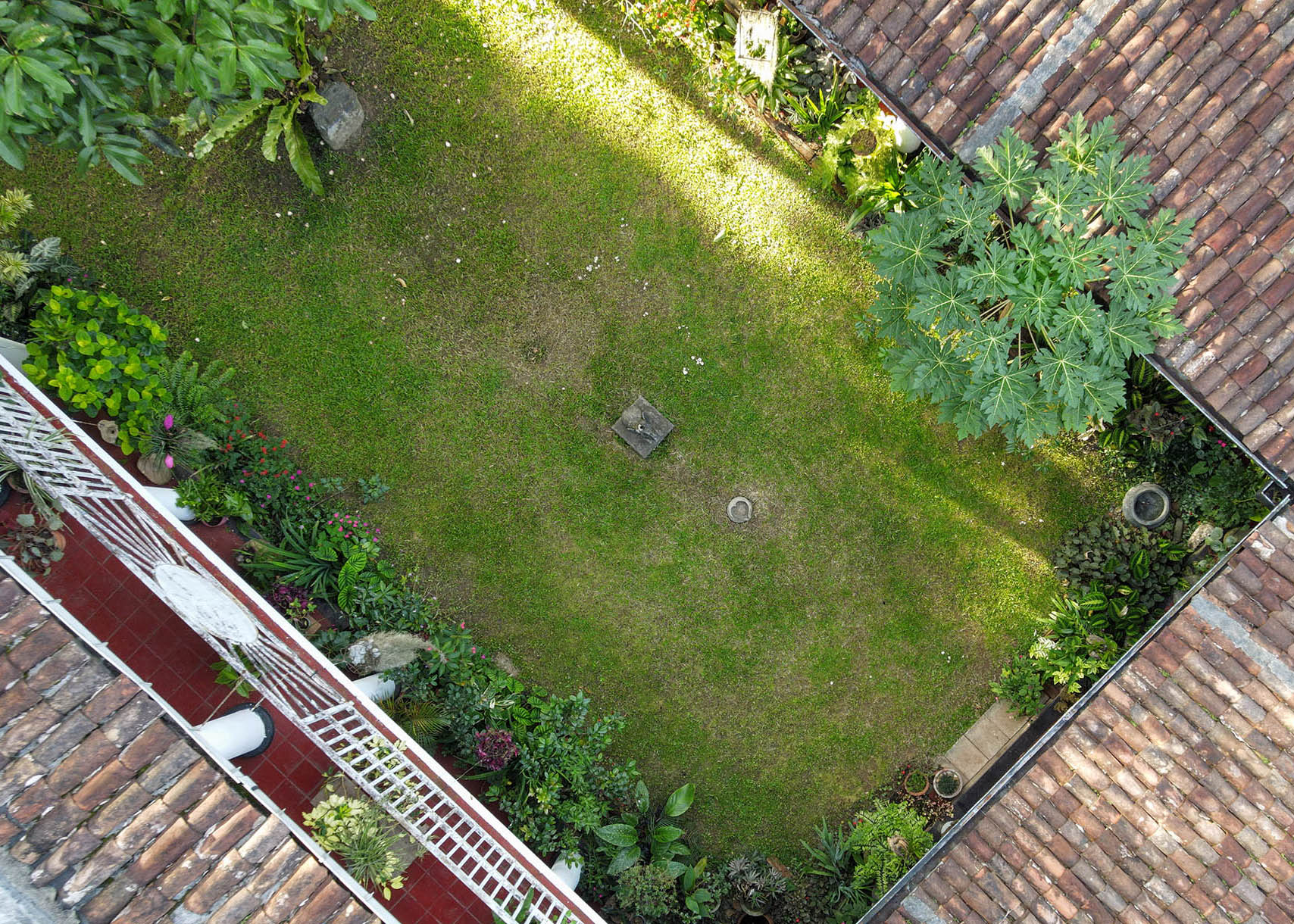
THE SURIYAKANTHA WALAWWA’S UNIQUE TRANSFORMATION: FROM L TO U
- Phase 1 : The L-Shaped Beginnings
The original structure formed an L shape, with two connected wings protecting an open service area used for daily tasks like threshing, herb gardening, and drying. From the front garden, the design revealed little—just a modest verandah and gabled exterior—while true domestic life unfolded within that sheltered inner elbow. - Phase 2 : The U-Shape Infilling
In the 1990s, a third wing was added opposite the longer arm of the L, yielding a U-shaped plan. Now, the former open yard was transformed into a three‑sided court—semi‑enclosed yet open‑faced—forming a hybrid spatial realm: part courtyard, part open hall.
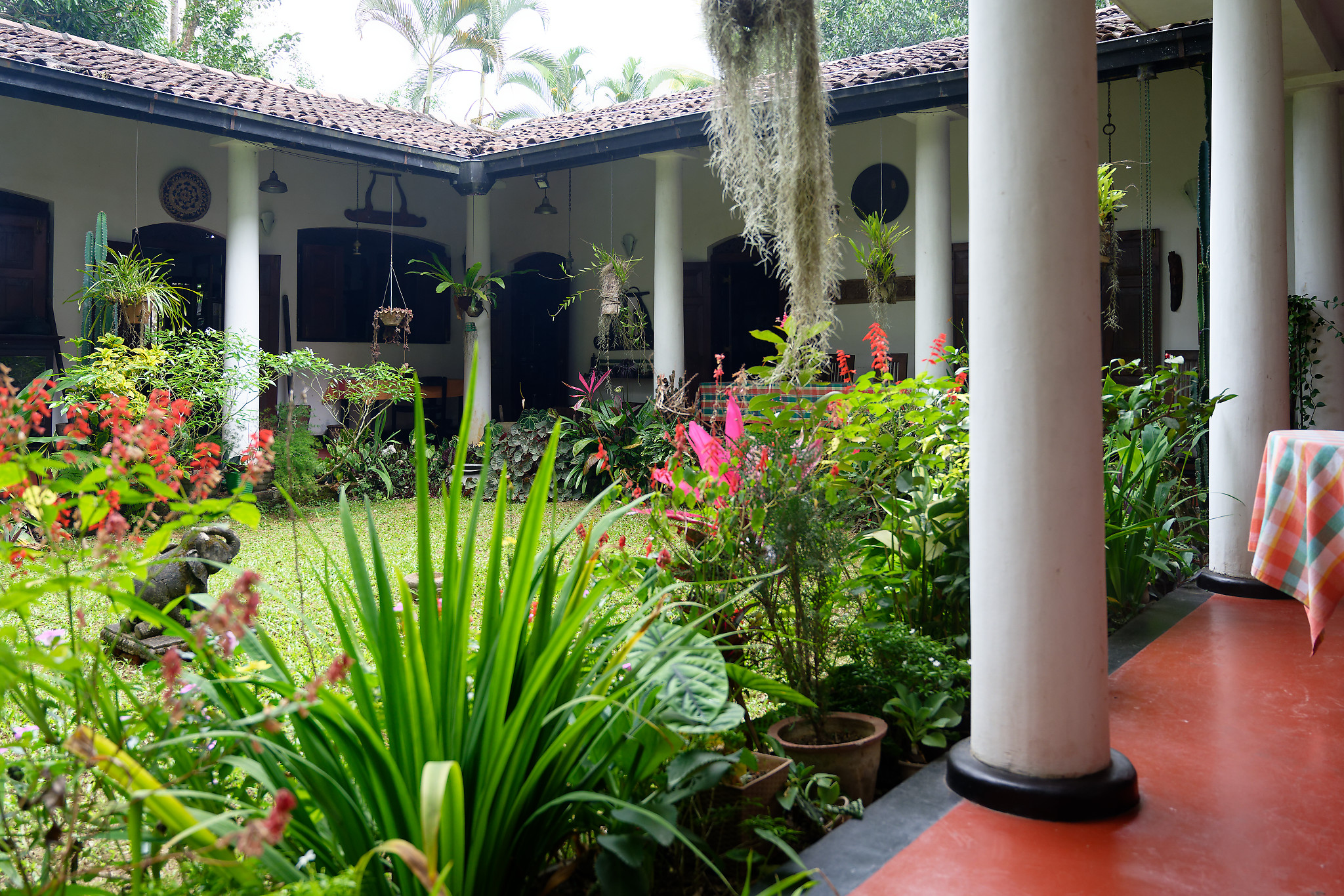
Naranwala Walawwa Courtyard © Janaka Samarakoon - Suriyakantha CAC Pvt Ltd.
THE GENIUS OF INDIGENOUS FORM: OPENNESS THAT BREATHES
This adaptation brings forward several virtues rooted in indigenous climate‑responsive architecture:
- Enhanced Ventilation and Thermal Comfort: The U‑shaped plan creates a breezeway aligned with prevailing monsoon winds, allowing fresh air to flow across the courtyard and into the surrounding rooms via shaded verandahs. This passive cooling strategy keeps interiors comfortably cooler—a hallmark of Sri Lankan vernacular design.
- Light, Landscape, and Spatial Grandeur : The open flank invites natural light and exterior views deep into the house, enriching the spatial experience. Unlike fully enclosed courtyards, the U‑shape blurs the boundaries between inside and outside, fostering a sense of expansiveness and connection with garden, sky, and surroundings.
- Responsive Rainwater Management : Traditional half‑round clay tiles and edge drains channel rainwater into discreet channels along the verandahs. The open side of the courtyard allows sudden downpours to be swiftly released outward, easing hydraulic load from the roof and paving. This subtle water strategy is in harmony with vernacular sustainability principles.
- Sensory and Ecological Porosity : With its open side, the courtyard allows ambient sounds, breezes, and scents—like rustling foliage, birdsong, or the aroma of curryleaf—to drift inside. The courtyard becomes a living threshold where architecture and nature intermingle, offering rich sensory engagement and ecological continuity.
- Flexible Everyday Rituals : Though not a ceremonial meda midula, the U‑courtyard supports daily life in new ways—offering shaded gathering areas, shifting light patterns, and adaptable thresholds between communal and private spaces. It is both garden and hall, planted room and wind‑cooled space.
The Suriyakantha Walawwa's courtyard transformation illustrates how vernacular understanding of climate, sensory nuance, and spatial adaptability can be extended—affording both functionality and immersive grace. It respects typology while becoming its own, opening architecture to nature’s rhythms rather than enclosing it.
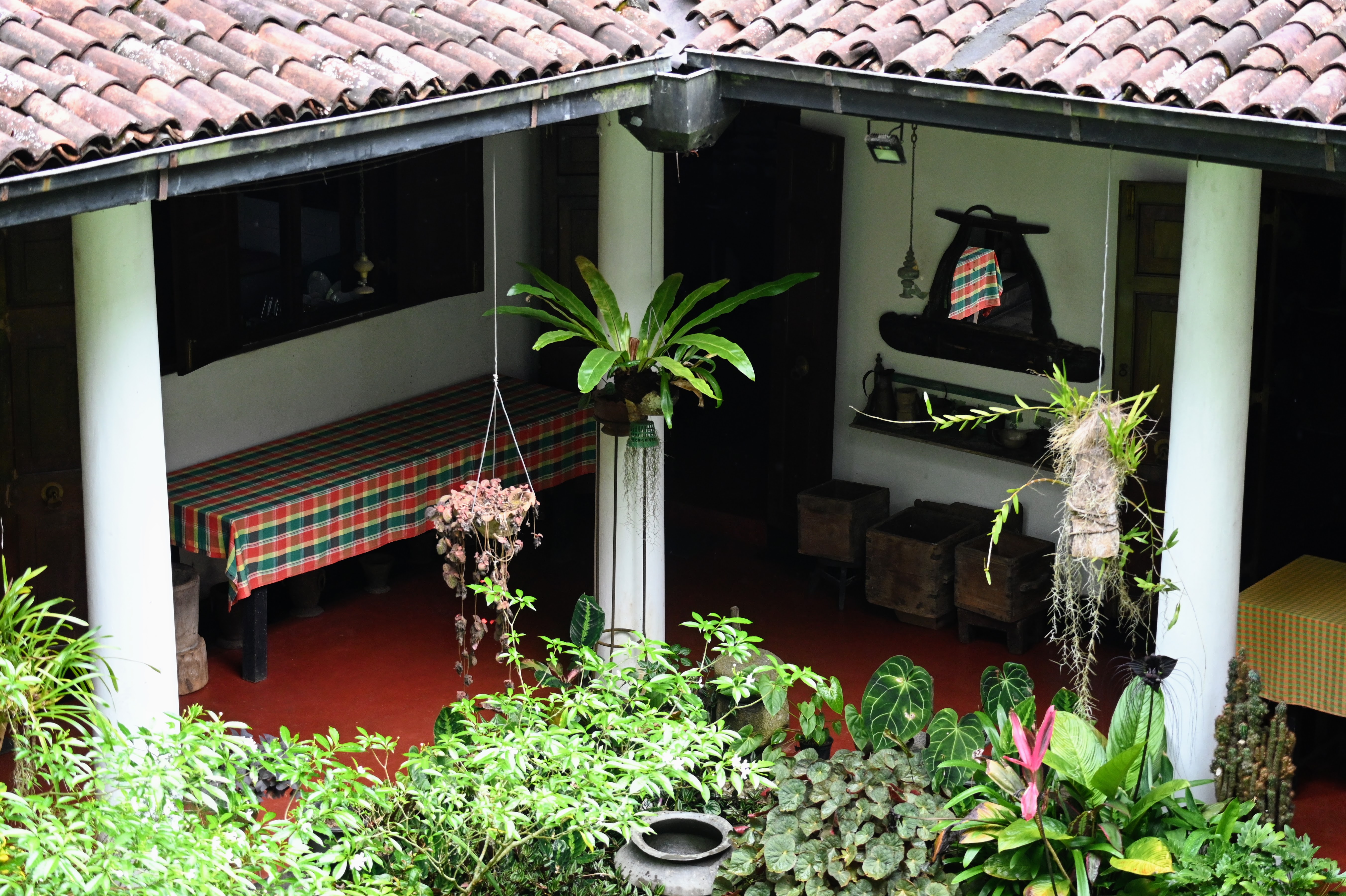
Naranwala Walawwa Courtyard © Janaka Samarakoon - Suriyakantha CAC Pvt Ltd.