
The Verandah at Suriyakantha Walawwa : A Transitional Masterpiece of Beauty, Utility, and Climatic Intelligence
For over a millennium, the primary medium for preserving written knowledge in sri lanka was the ola leaf manuscript, crafted from the cured leaves of the corypha umbraculifera (talipot palm).
After harvesting, the leaves were boiled, dried, and polished to create a smooth yet durable writing surface. Scribes incised the text into the leaf with a fine metal stylus, then rubbed in a mixture of soot and oil to make the letters stand out against the pale golden background.
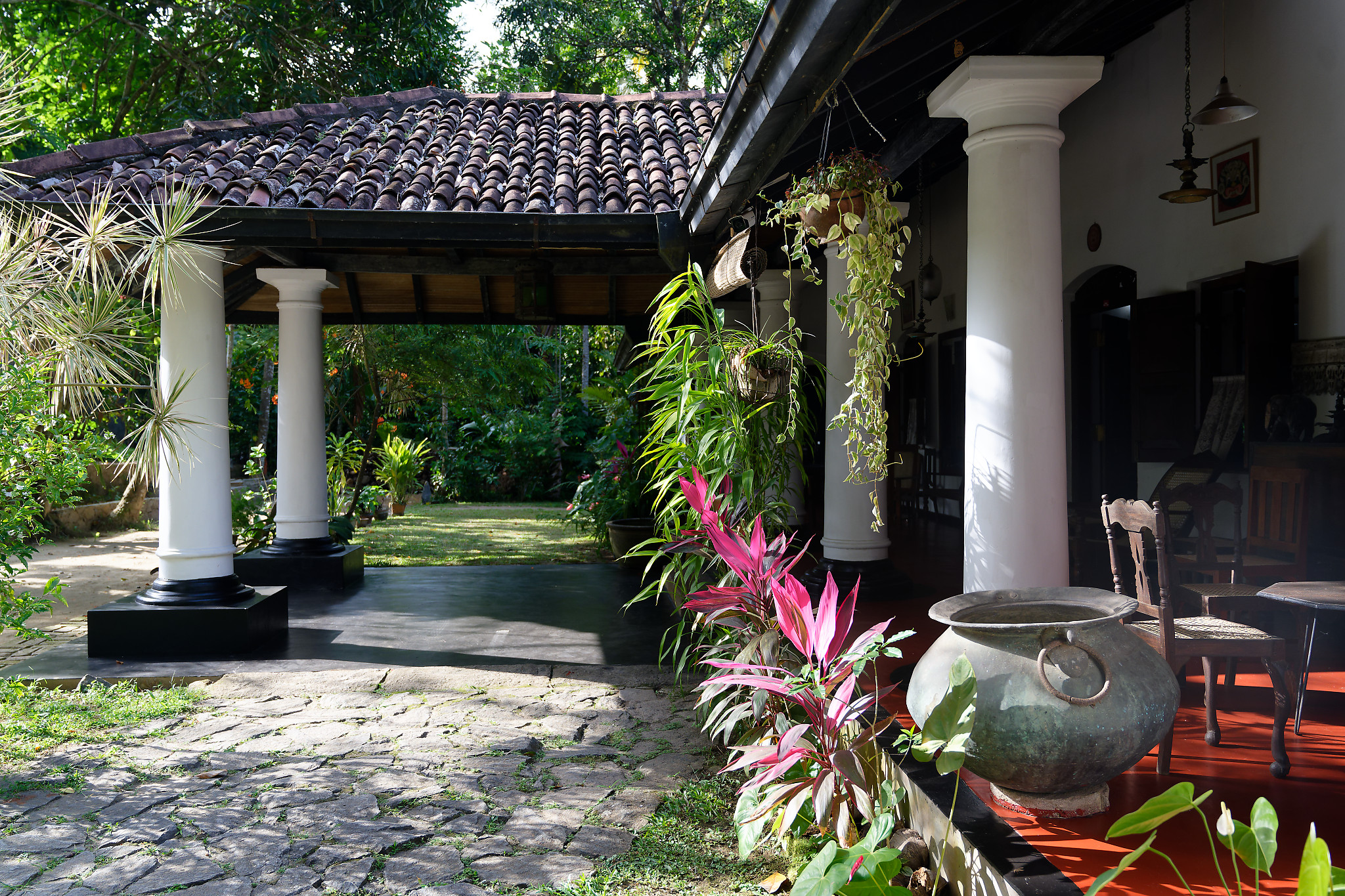
Supported by masonry columns—solid yet elegantly proportioned—and sheltered by wide overhanging eaves, it forms a shaded gallery harmoniously linking the house’s interior to the surrounding garden. In keeping with the island’s building traditions, it is complemented by a short projecting portico, set perpendicular to the main colonnade and carried by two columns. Characteristic of Sri Lankan domestic architecture, this feature adds rhythm to the façade and creates a welcoming axial entry. This transitional space—neither fully indoors nor entirely outdoors—is traditionally known as the pila, a term rooted in the vernacular vocabulary.
Far more than a decorative façade, the verandah once formed the social heart of domestic life. Here, guests were received, instructions given to servants, meals shared, conversations exchanged, and moments of quiet reflection enjoyed. In walawwa households, it served both as a place of hospitality and as a threshold between public and private spheres.
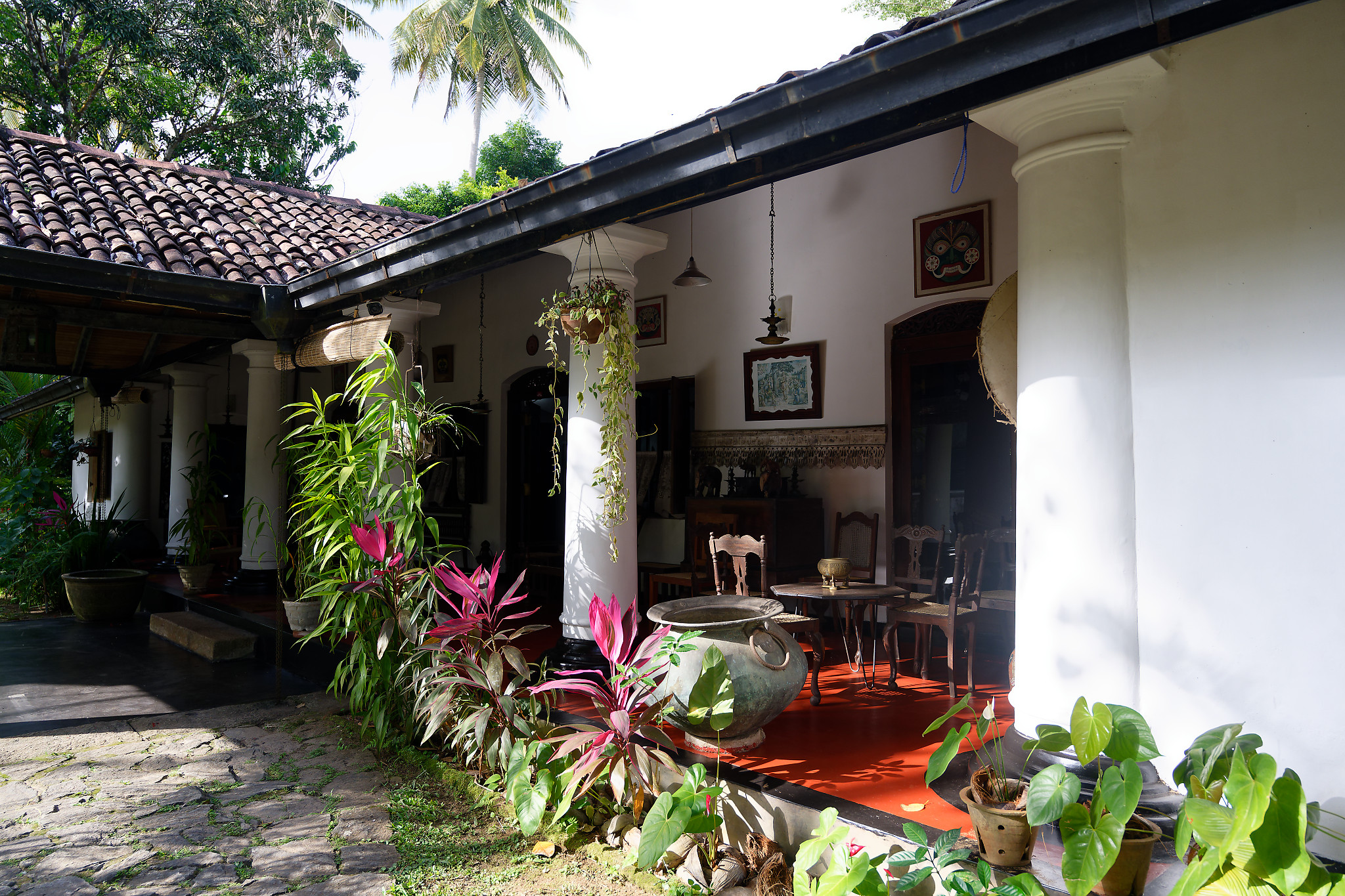
The Verandah at Naranwala Walawwa © Janaka Samarakoon - Suriyakantha CAC Pvt Ltd.
An Ingenious Response to the Tropical Climate
Architecturally, the verandah exemplifies a remarkable adaptation to the tropical climate. Its tiled roof and shaded colonnade shielded the house from sun and rain while encouraging cross-ventilation into the adjoining rooms. The terracotta flooring contributed to thermal regulation, absorbing and releasing heat to maintain a pleasant atmosphere. Long before the arrival of modern technologies, such passive strategies—common in local construction—ensured both comfort and durability.
Its openness—visual as well as spatial—offered views into the courtyard and surrounding greenery, reinforcing the intimate bond between house and landscape. This quality anticipated principles later developed by architects such as Minnette de Silva and Geoffrey Bawa, who made the verandah a central element of spatial composition. Thus, the verandah of the Naranwala Walawwa endures as a timeless architectural gesture: a subtle harmony of shelter, sociability, and nature, expressed with elegance and restraint.
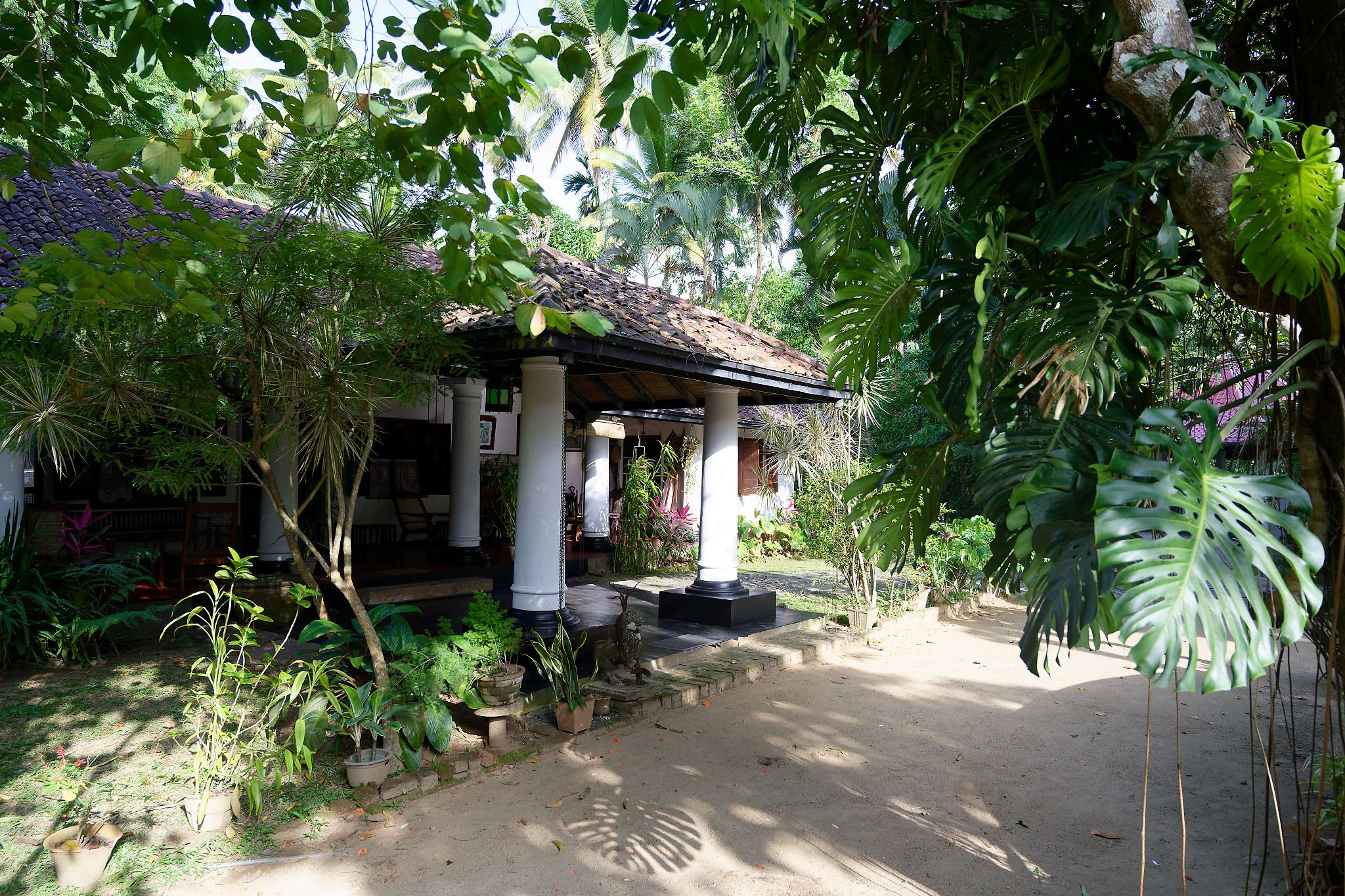
The Verandah at Naranwala Walawwa © Janaka Samarakoon - Suriyakantha CAC Pvt Ltd.
Minnette de Silva (1918–1998), the first woman architect in Asia to engage with the international modernist movement, consistently integrated vernacular features such as verandahs, courtyards, and local craftsmanship (carved wood, traditional tiles) into contemporary projects—for example, the Karunaratne House in Kandy (1951). She maintained that modern architecture had to remain rooted in the genius of place and the island’s climate.
Geoffrey Bawa (1919–2003), a leading figure of tropical modernism, placed verandahs and transitional spaces at the very heart of his practice. In his most emblematic works—the Lunuganga Estate residence and the Heritance Kandalama Hotel—he created fluid thresholds between inside and outside, multiplying light effects, framed views of nature, and cross-ventilation. For Bawa, the verandah was no longer a mere appendage: it became a central space where architecture and landscape merged into one.