
Pettagama (පෙට්ටගම) – The Traditional Sri Lankan Wooden Chest of Heritage and Security
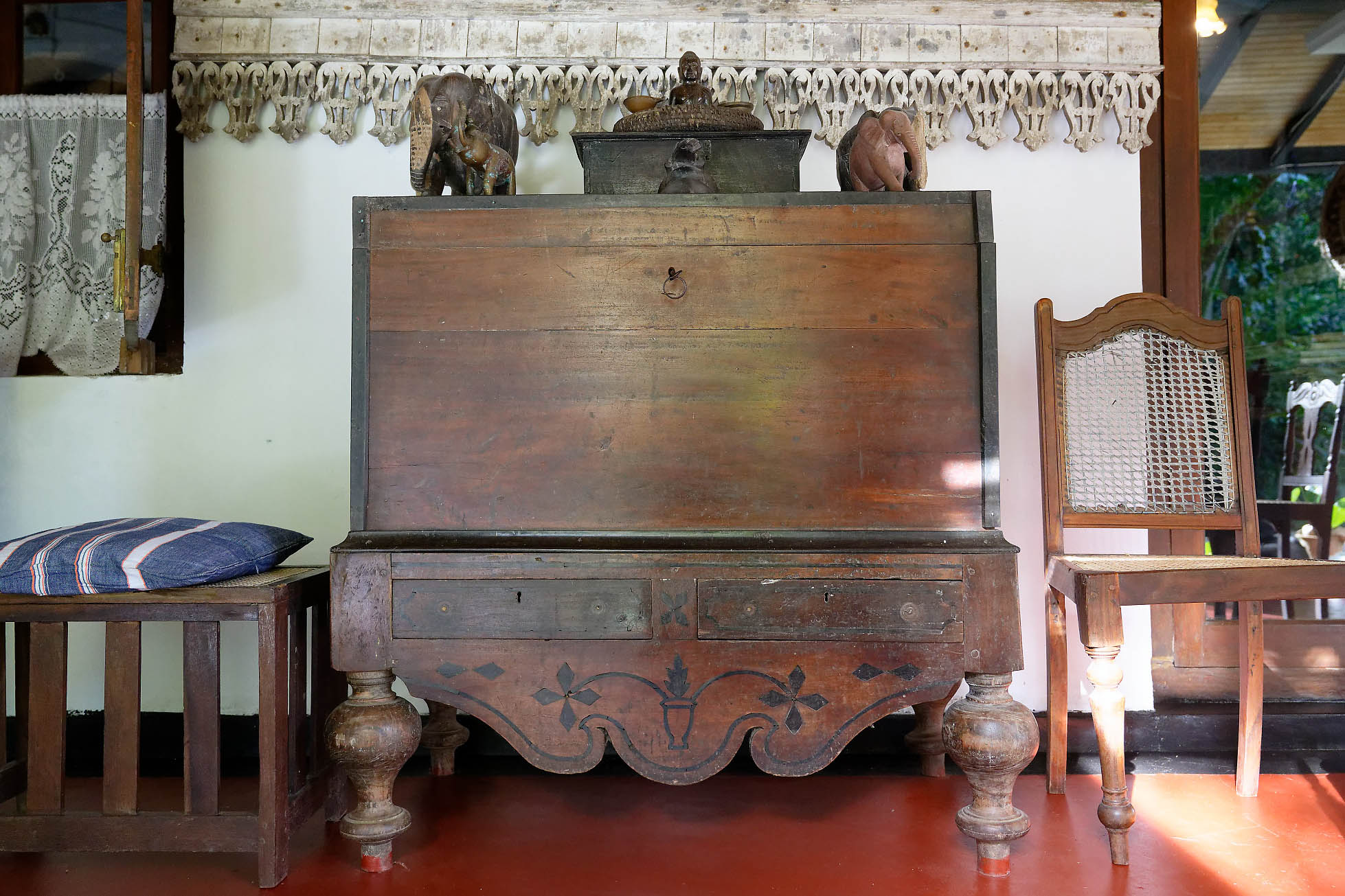
The pettagama (sinhala පෙට්ටගම, sometimes called the “dutch box”) is a heavy wooden chest that served multiple functions in sri lankan homes.
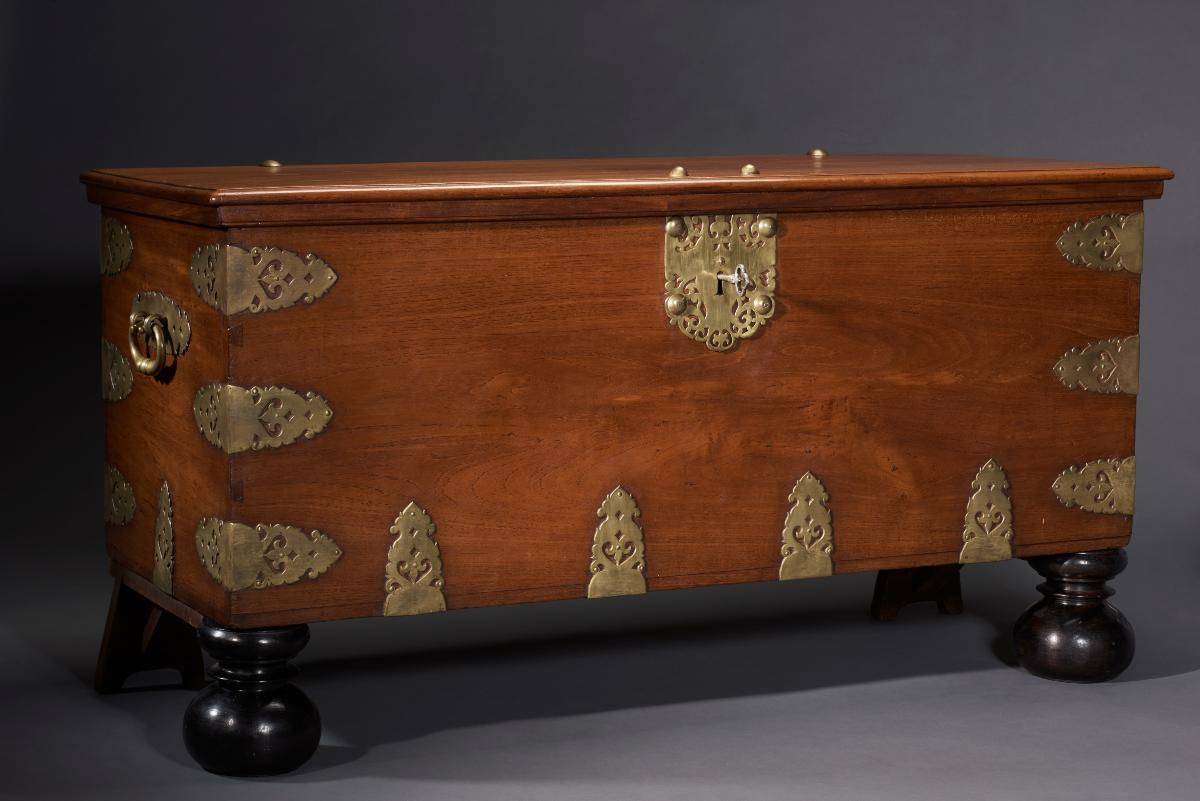
Early examples were used as rice bins, protecting paddy from moisture and rodents; traders also slung them between carrying poles when travelling, and well-to-do families locked jewellery, documents and fine textiles inside. Built from dense local timbers such as jak (Artocarpus heterophyllus), ebony, calamander or teak and banded with brass hinges or studs, a pettagama was hard to steal and became a visible badge of household prosperity and continuity.
European-style case furniture arrived with the Portuguese (16th century) and spread widely during Dutch rule of the coastal districts (1640 – 1796). Local carpenters quickly adapted European strong-box forms to indigenous woods: the result was the Sinhalese pettagama, prized by both Dutch officials and Kandyan families. Surviving pieces therefore mix European hardware (locks, hasps, carrying handles) with indigenous joinery and ornament, and many later writers simply dubbed them Dutch boxes.
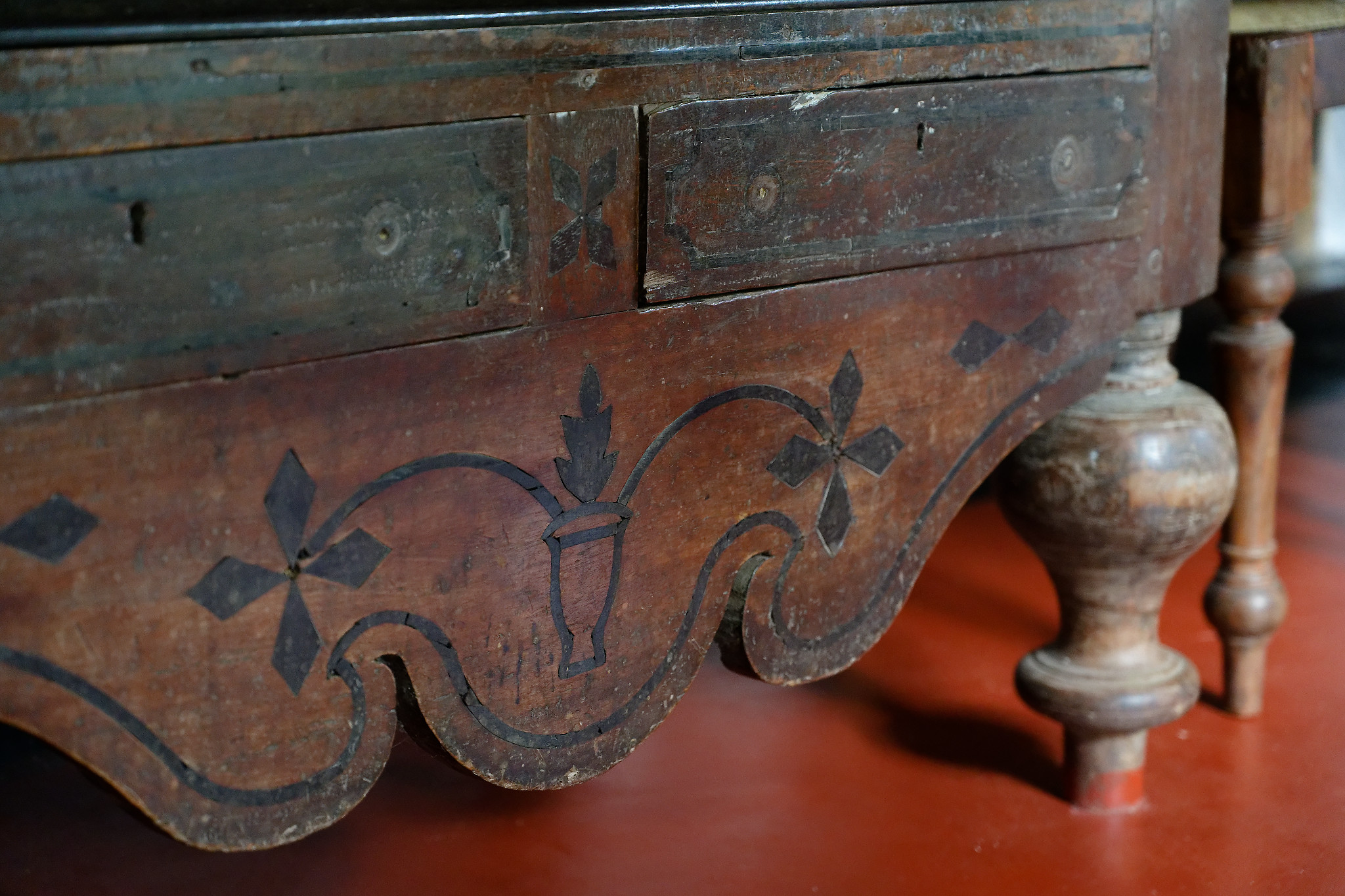
Exquisite bichromatic marquetry in jack wood and ebony — a rarity in traditional Sri Lankan furniture | © Janaka Samarakoon - Suriyakantha CAC Pvt Ltd.
This particular chest pairs jak with black ebony, the two-tone contrast creating a refined bichromatic marquetry patterns. Its iron lock incorporates a small spring-mounted bell that rings whenever the key is turned—a simple but effective tamper alarm found on some 18th-century export chests.
Unlike the block-footed “five-foot” VOC travel chests made in Dutch workshops, this example stands on four turned bun feet, a feature more typical of inland Sinhalese work. Hidden behind a false floor are two miniature drawers accessed by a sliding panel: such secret compartments were reserved for heirloom jewellery, small reliquaries or the household deed bundle.
MARQUETRY IN SRI LANKAN 'TRADITIONAL' FURNITURE
Marquetry—the art of creating decorative patterns from contrasting veneers—was never widespread in Sri Lankan domestic furniture. Most village and Kandyan pieces relied on solid carving, boldly turned legs and brass mounts. Intricate inlay appeared mainly in urban workshops from the late 18th century onward, when European patrons desired “specimen-wood” showpieces. Ebony-and-jack marquetry, as seen on this pettagama, therefore signals a rare, high-status hybrid: local craftsmanship meeting colonial-era taste. Its two-tone starbursts and chequer motifs stand out precisely because they were exceptional in the island’s broader woodworking tradition.
© 2025 Suriyakantha CAC (Pvt) Ltd | All Rights Reserved