
Planters’ Chair aka “Verandah Chair”
.jpg)
With its low, reclining profile and elegantly elongated arms that swing or fold forward to become leg-rests, the sri lankan planters’ chair was purpose-built for life on a tropical veranda.
The design allowed tea and coffee planters—often clad in tight riding boots—to elevate their feet, catch the breeze through a ventilating cane seat, and survey the estate at day’s end.
Imported European ideas met local craftsmanship: British officials and merchants commissioned Sinhalese carpenters to adapt portable campaign chairs into something grander, using dense native timbers such as teak, satinwood and ebony and pegged joinery that withstood monsoon humidity. By the late 1800s the chair had become a fixture of plantation bungalows from Nuwara Eliya to Galle, so closely associated with outdoor sitting rooms that colonial inventories simply list it as the “verandah chair.”
Beyond its practicality, the Planters’ Chair embodies a layered history: the exchange between European taste and Sri Lankan skill, the economics of plantation society, and the leisurely rituals of gin-and-tonic evenings that once defined colonial Ceylon.
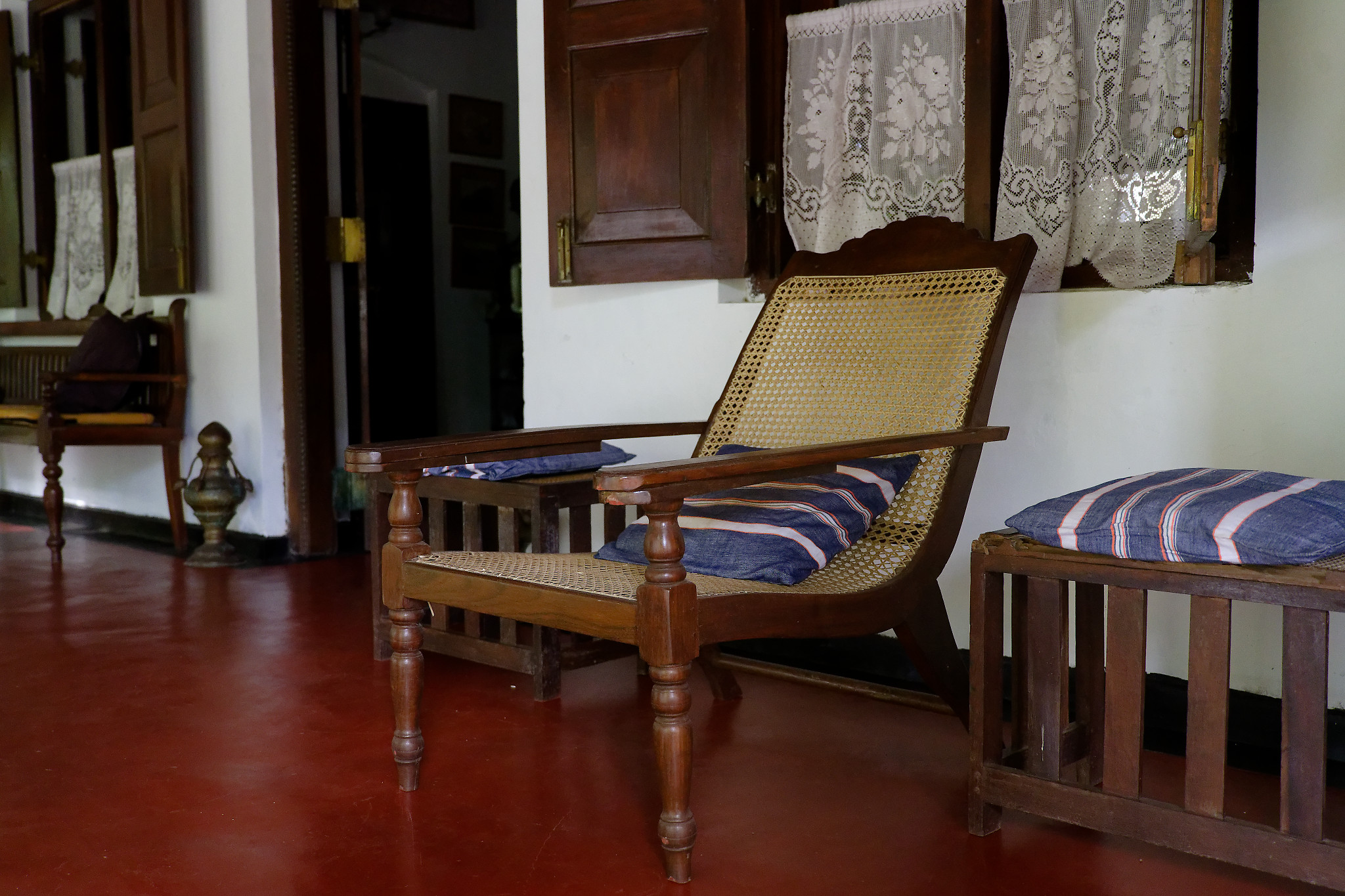
Planters’ Chair at the Suriyakantha verandah © Janaka Samarakoon - Suriyakantha CAC Pvt Ltd.
COMMON IN ESTATE INVENTORIES & EXPORTED ACROSS THE EMPIRE
By the late 19th century, the chair appeared in estate inventories across Ceylon simply as the “Verandah Chair”—a sign of its ubiquity in planter households from Nuwara Eliya to Matara.
Variations of the Sri Lankan Planters’ Chair were exported to Burma, Malaysia, and India, where they were also favoured by colonial officers and merchants—spreading the “Ceylonese verandah style” beyond the island.
© 2025 Suriyakantha CAC (Pvt) Ltd | All Rights Reserved