
Tabbova–Maradanmaduva Terracotta Figurines
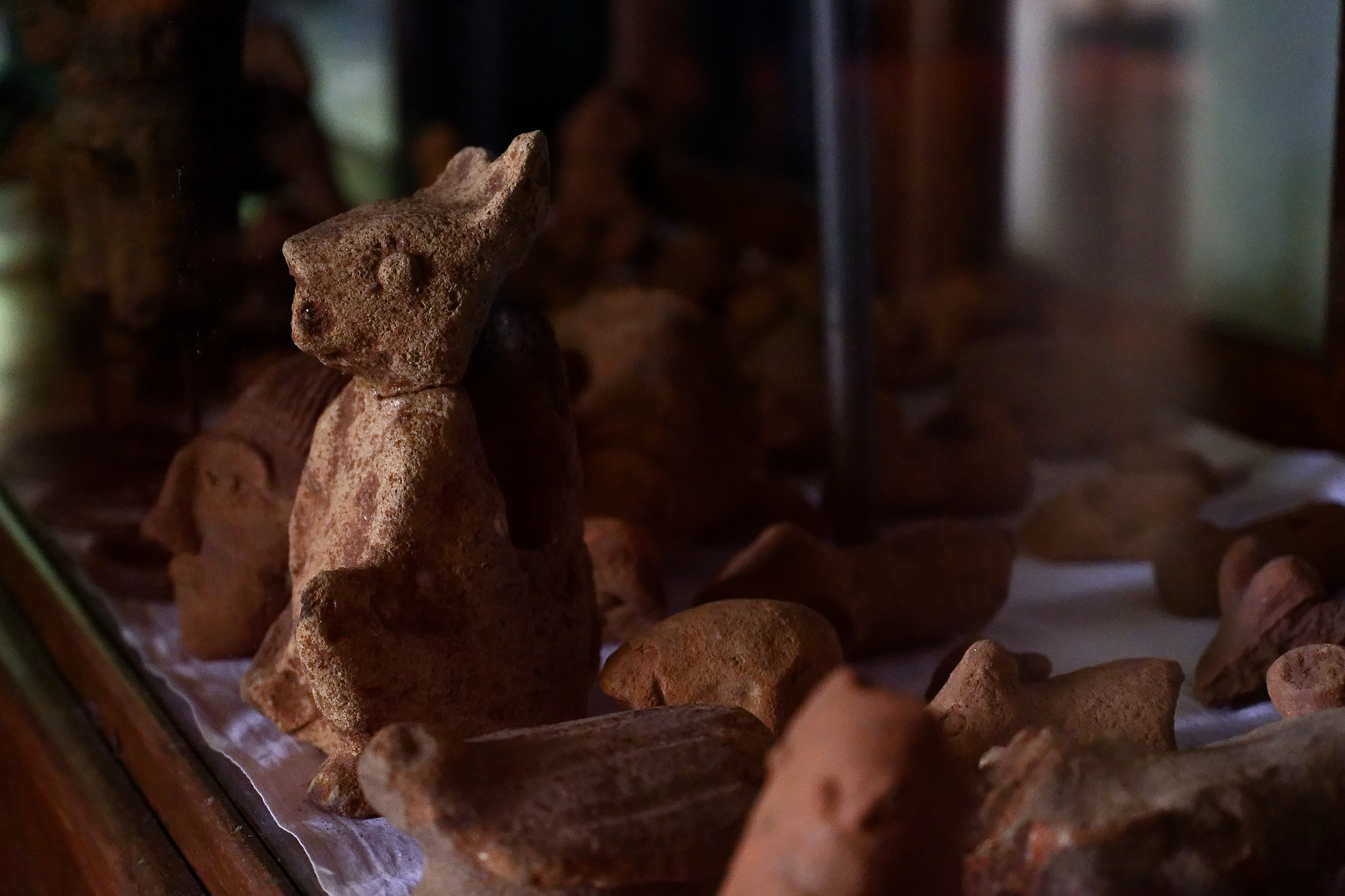
A century of chance finds across sri lanka’s dry zone has revealed a distinctive corpus of small, baked-clay objects—female and animal figurines, phallic forms, appliquéd vessel fragments—known collectively as the Tabbova–Maradanmaduva culture.
The label comes from two of the first recovery sites, Tabbova (1940) and maradanmaduwa (1953), documented by archaeologist P.E.P Deraniyagala after A/M. Hocart’s pioneering report of 1921.
A late-Anuradhapura date
For decades scholars argued whether these rustic figures were prehistoric or early-historic. Stratigraphic excavation at Nikawewa in 2007 finally provided an absolute date: optically-stimulated luminescence on the terracotta horizon yielded AD 1060 ± 80, placing the assemblage at the very end of the Anuradhapura period and confirming a remarkable stylistic uniformity across sites.
Style & iconography
Despite their rough modelling, the pieces display telling details—appliqué breasts, incised hairstyles, arched eyebrows. Most belong to four recurring types: seated or hour-glass female figures, phallic or phallic-female hybrids, bovids and elephants, and miniature architectural fragments.
Ritual landscapes
Excavations show the figurines were deliberately broken and buried in shallow pits beside reservoirs (wewa) and paddy fields—landscapes central to Sinhalese hydraulic agriculture. Their repeated association with water-management features supports the view that they were votive offerings meant to secure rainfall and protect crops, functioning in a parallel “folk” ritual sphere alongside state-sponsored Buddhism.
Why it matters
Objects like those on display from the Suriyakantha collection embody a little-understood religious tradition that flourished on the island’s agrarian frontier as the great monastic centres waned. With no texts to decode their rites, these fragmentary figures remain one of Sri Lankan archaeology’s most evocative enigmas—mute witnesses to common beliefs about fertility, water and the precarious art of sustaining life in the Dry Zone.
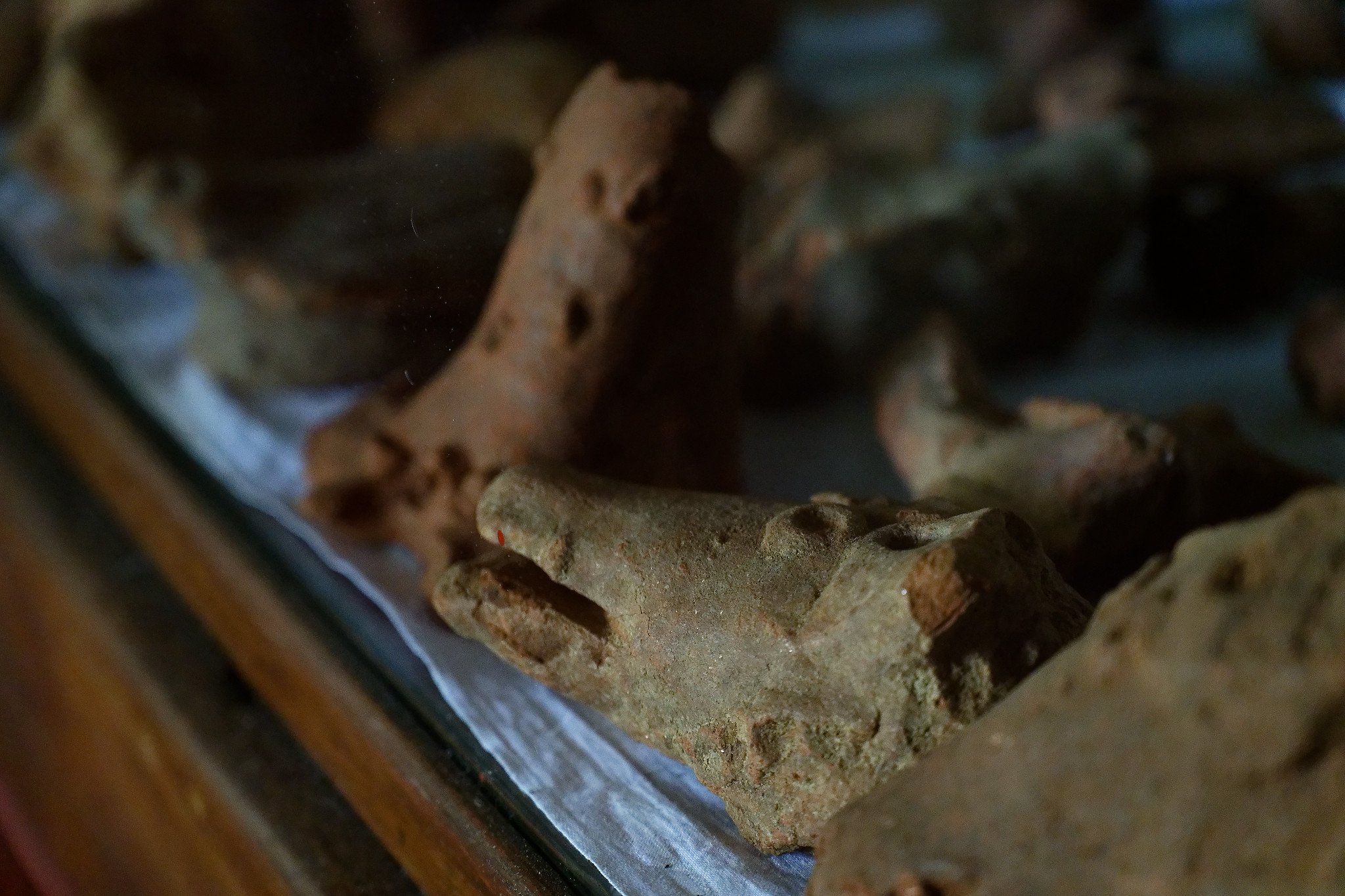
Tabbova–Maradanmaduva Figurines - North-Central & North-Western Dry Zone, Sri Lanka — c. AD 1060 © Janaka Samarakoon - Suriyakantha CAC Pvt Ltd.
FURTHER READING…