
Traditional Sri Lankan Grinding Implements
කුරහන් ගල, මිරිස් ගල, වන්ගෙඩිය
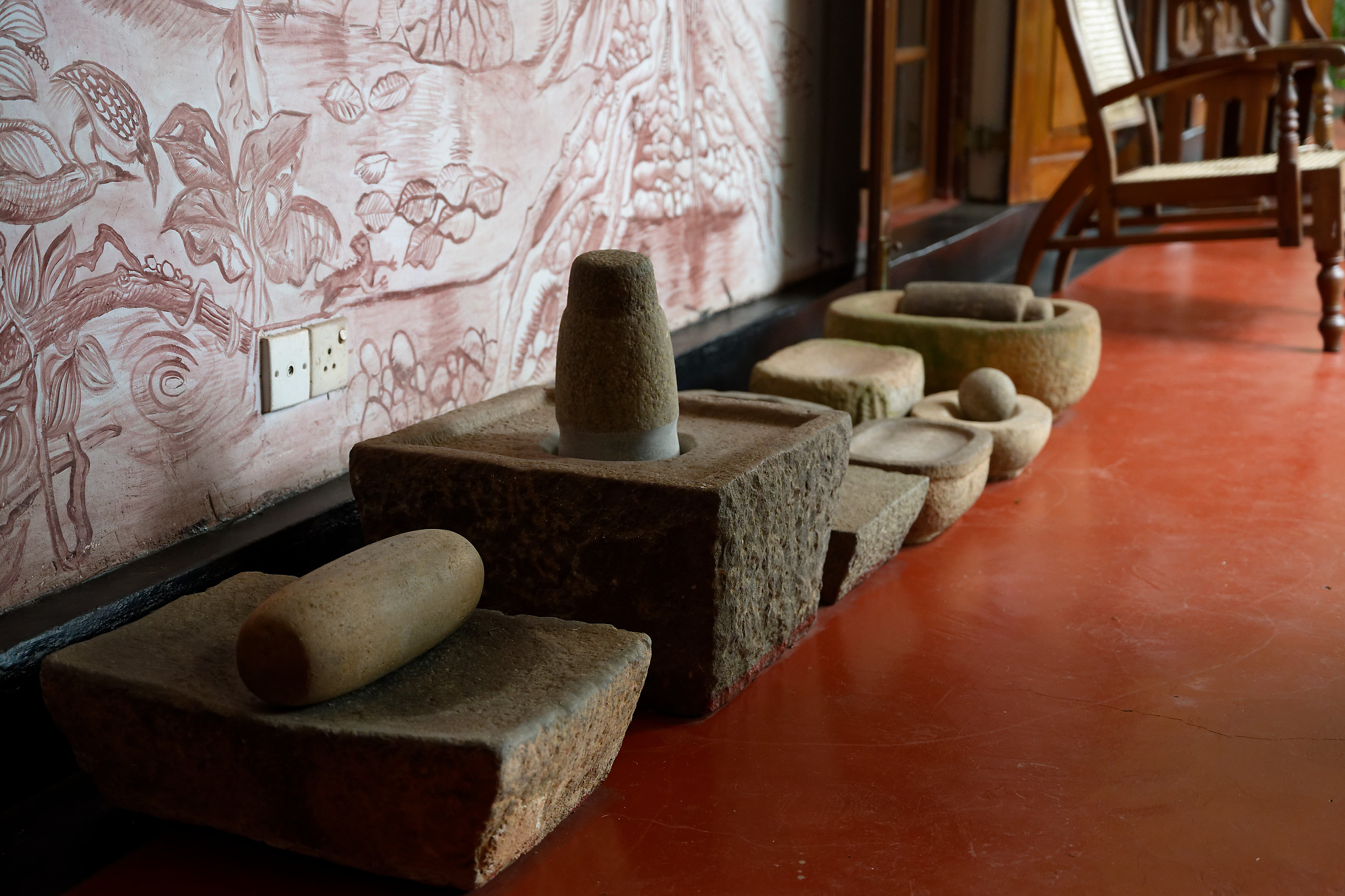
Before the advent of mechanised mills, sri lankan kitchens depended on a variety of hand-operated grinding implements, each purpose-built and indispensable to daily life.
The Suriyakantha Collection preserves several examples—some over a century old, others crafted by contemporary artisans, as these traditional devices remain in use today for reasons ranging from taste and texture to cultural continuity. All pieces in the collection have been locally sourced, reflecting the enduring place of manual milling in Sri Lanka’s culinary heritage.
The Rotary Quern (Kurahan Gala – කුරහන් ගල)
Primarily used for milling grains, the Sri Lankan rotary quern—locally known as kurahan gala—features two horizontal granite stones mounted one above the other. The lower stone remains stationary, while the upper stone rotates around a central pivot. Grain is poured through a hole at the centre of the upper stone and ground between the two surfaces as it turns, powered by a wooden handle set near its rim.
The name kurahan gala reflects its most common use: grinding kurahan (කුරහන්), the Sinhala term for finger millet (Eleusine coracana)—a hardy, drought-resistant grain long cultivated in Sri Lanka’s Dry Zone. The resulting flour was used to prepare a variety of nutrient-rich traditional staples and sweets. While primarily associated with millet, the quern was also employed for grinding rice, maize, or pulses, though its design made it less suitable for spices.
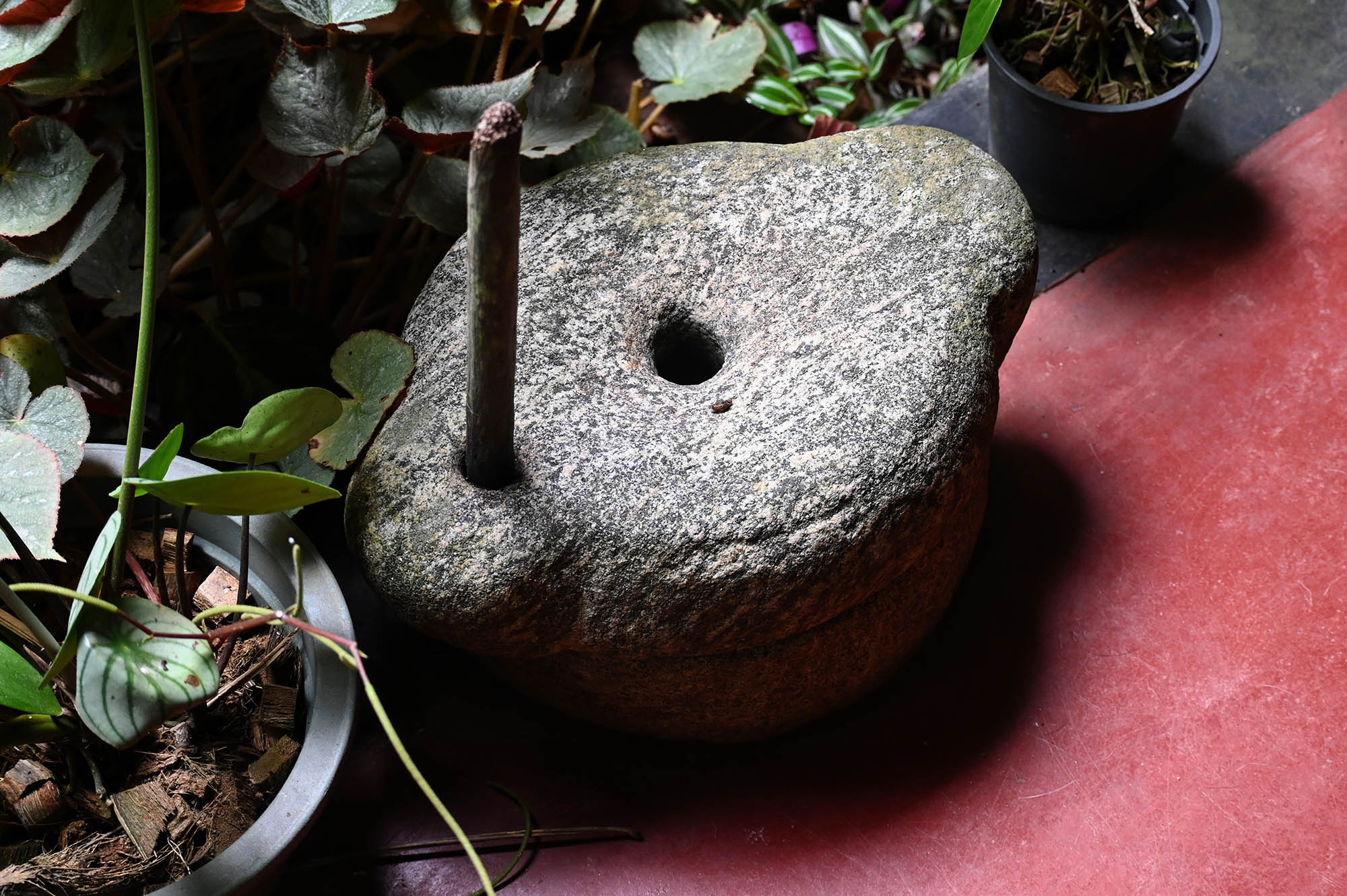
Primarily used for milling grains, the kurahan gala consists of two horizontal granite stones mounted one above the other. © Janaka Samarakoon - Suriyakantha CAC Pvt Ltd.
The Flat Grinding Stone (Miris Gala – මිරිස් ගල)
The miris gala—literally “chilli stone”—is a flat or slightly concave slab of granite paired with a cylindrical upper stone. The upper stone is rolled or pushed back and forth over the lower surface, crushing and blending ingredients. Its primary and most iconic use was the preparation of pol sambal—a fresh coconut relish made daily in almost every household, most often for breakfast, and served with kiribath, hoppers, string hoppers, or plain rice.
Beyond pol sambal, the miris gala was used for wet spice pastes, curry mixtures, and medicinal preparations. Unlike the quern, it was ideal for delicate aromatics such as chillies, pepper, coriander, garlic, and ginger, whose essential oils and flavours are released through slow, steady grinding.
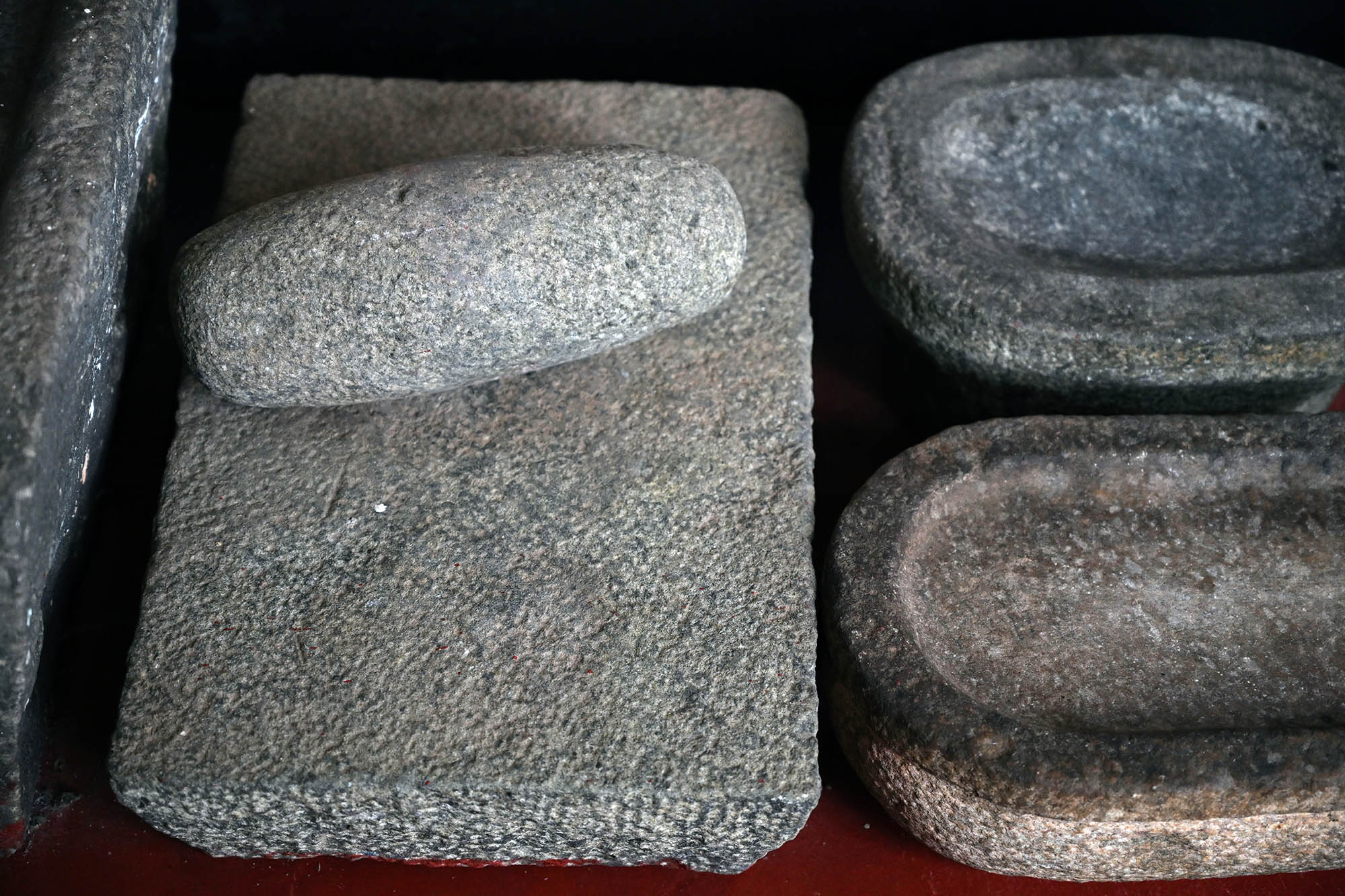
“Chilli stone”: The upper stone is rolled or pushed back and forth over the lower surface, crushing and blending ingredients © Janaka Samarakoon - Suriyakantha CAC Pvt Ltd.
The Mortar and Pestle (Wangediya – වන්ගෙඩිය)
The wangediya is a tall, deep mortar—made of hardwood such as jak or coconut, or occasionally stone—paired with a long, heavy pestle. Traditionally, it was used to pound soaked rice into flour for festive dishes. Its depth and sturdy walls allowed the pounding of larger quantities of grain without spillage, making it suitable for both household and community food preparation.
The pounding could be performed by a single person or by two people alternating in a rhythmic choreography, each striking in turn. Both hands were typically used to grip the pestle, but the most skilled practitioners mastered an alternating one-handed grip, switching hands mid-motion. This technique allowed for a faster, more effortless rhythm, enabling long sessions without fatigue. The steady, percussive beat of the wan gediya was once a familiar sound in village kitchens, accompanying the communal effort behind everyday and ceremonial foods.
Together, the kurahan gala, miris gala, and wan gediya reflect the ingenuity of Sri Lankan domestic technology—simple yet highly adapted tools crafted from durable local materials. They embody a culinary tradition in which manual skill, social interaction, and the preparation of food were inseparable, sustaining generations long before mechanisation transformed the kitchen.
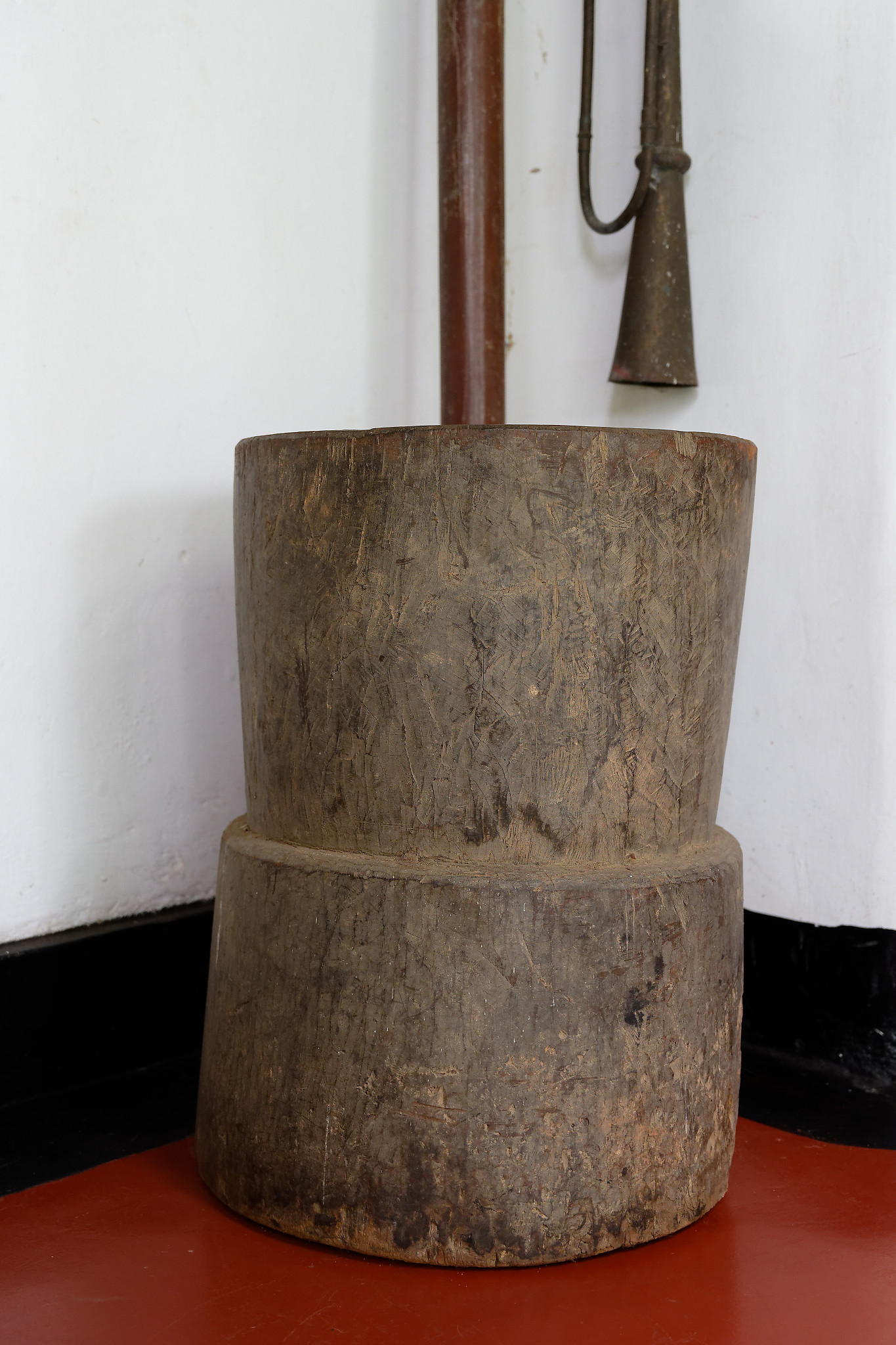
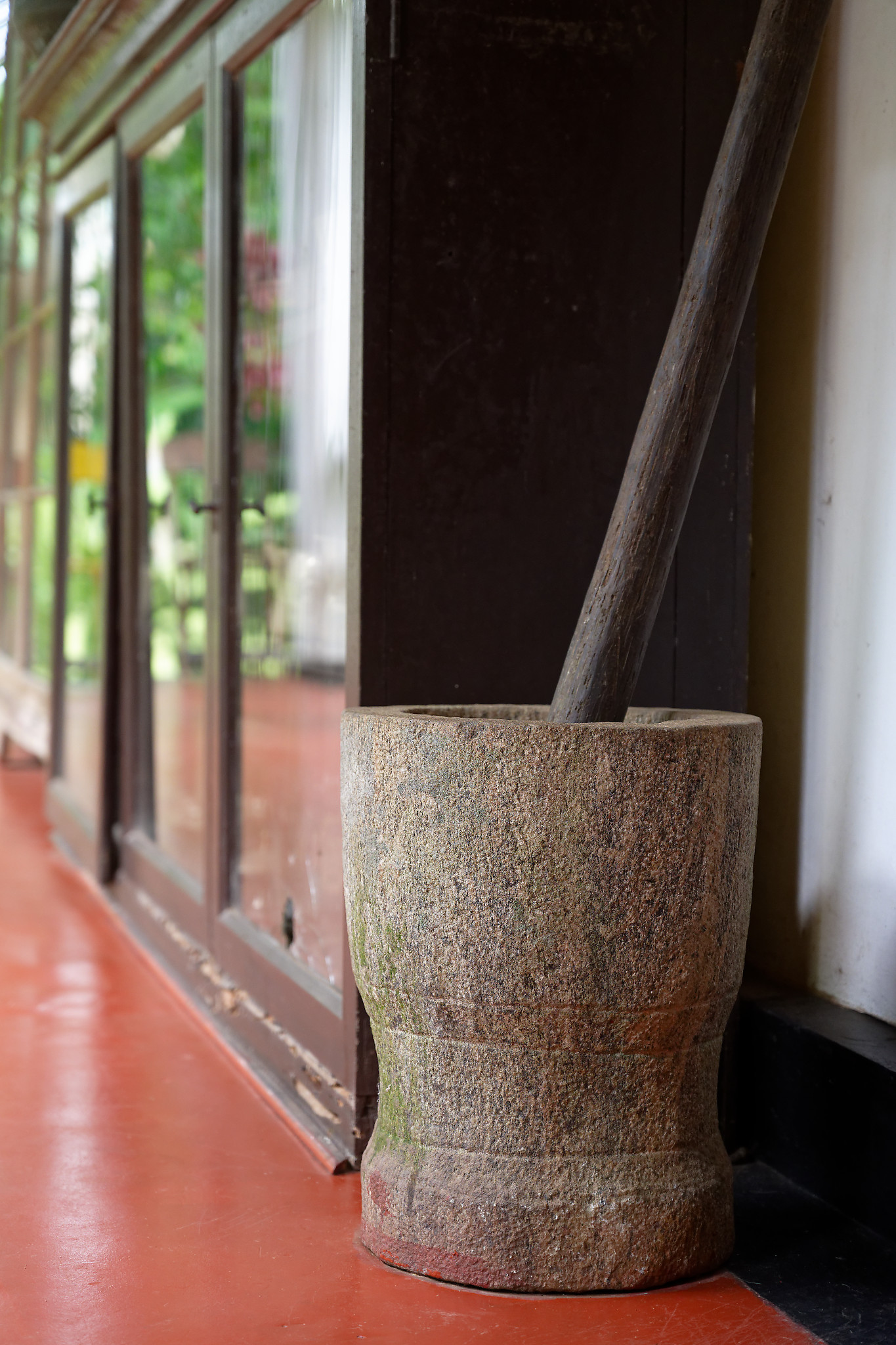
The wangediya is a tall, deep mortar made of hardwood such as jak (left) or coconut, or occasionally stone (right) | © Janaka Samarakoon - Suriyakantha CAC Pvt Ltd.
© 2025 Suriyakantha CAC (Pvt) Ltd | All Rights Reserved